Not all No-Touch PRK is created equal!
A New Generation of Surface Laser Surgery
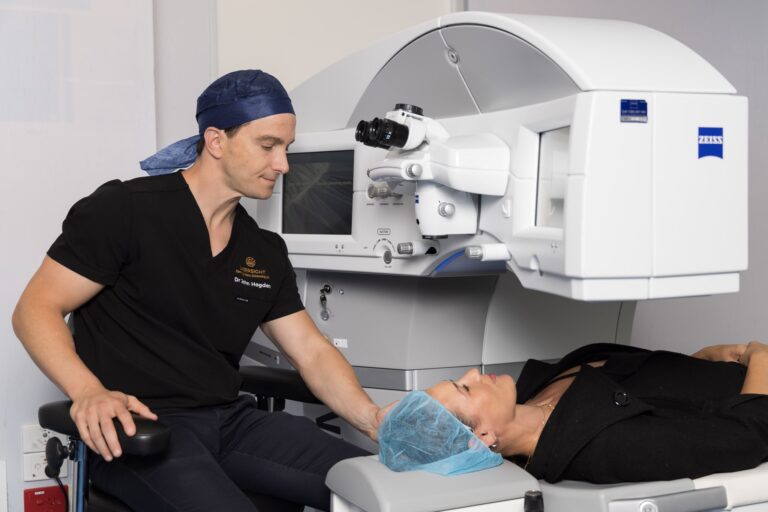
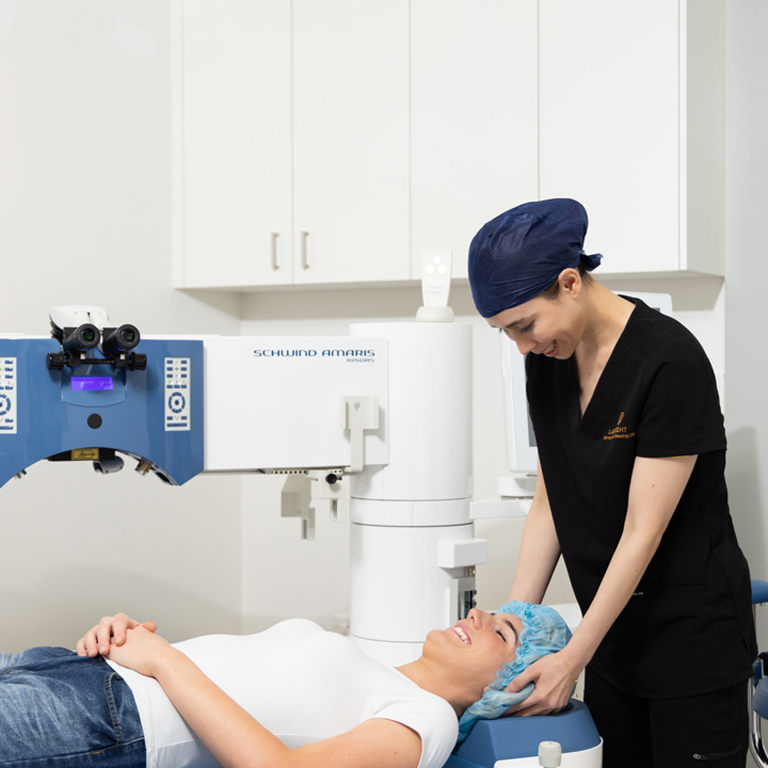
Our No-Touch PRK (Trans-epithelial PRK using the Schwind Amaris laser) takes surface laser correction to the next level by combining fully contact-free technology with individualised epithelial mapping.
What is “No-Touch” PRK?
Traditional PRK involves manually removing the corneal epithelium before laser reshaping, whereas LASIK and SMILE involve suction docking of the femtosecond laser.
No-Touch PRK (also called TransPRK or Trans-epithelial PRK) uses the excimer laser alone to both remove the epithelium and reshape the cornea — completely contact-free.
This single-step laser process eliminates the need for mechanical instruments, alcohol solutions, or suction devices, offering a gentler, quicker, and more uniform treatment.
The Key Difference — True Customisation
Most TransPRK platforms assume every patient’s corneal epithelium has the same thickness profile. In reality, epithelial thickness varies significantly between individuals — and even between regions of the same eye.
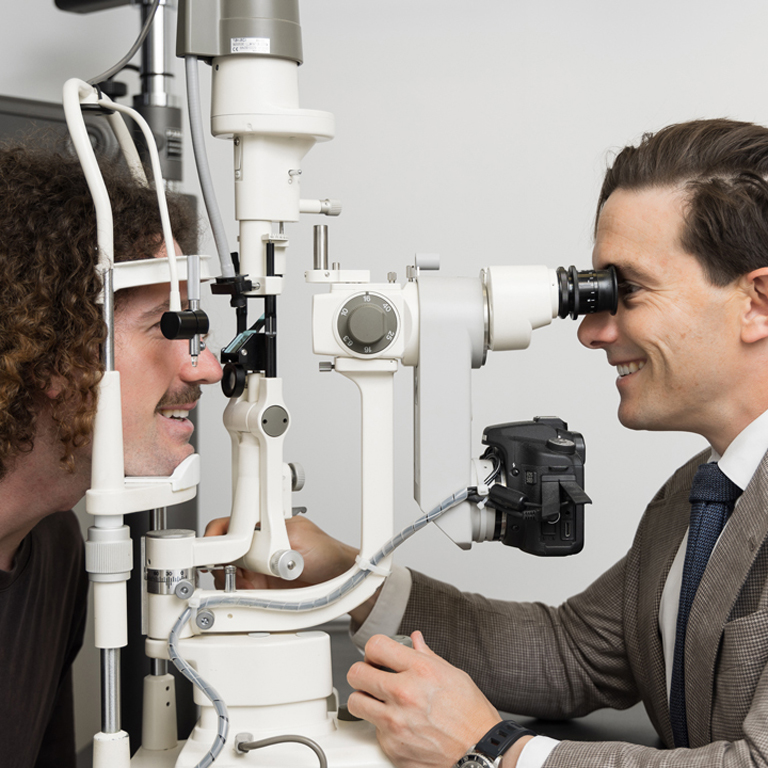
At Lasersight, we use the advanced MS-39 anterior segment tomographer to precisely map each patient’s epithelial layer before surgery. This map is then imported directly into the Amaris excimer laser, guiding a personalised bespoke ablation pattern that removes only the exact epithelial tissue necessary over the ablation area.
When to Consider No-Touch PRK
Optometrists may consider referral for patients who:
- Are unhappy with glasses or intolerant of contact lenses
- Have professions or hobbies where glasses or contacts are bothersome
- Have thin corneas unsuitable for LASIK flap creation
- Present with mild corneal irregularities or scars (these patients may benefit from photo therapeutic keratectomy using the same no touch technology)
- Are particularly nervous or squeamish about their eyes being touched
- Engage in contact sports or occupations where LASIK flap safety is a concern
- Have mild to moderate refractive errors (typically up to –8.00D myopia)
Key Advantages
Recovery and Expectations
Patients can expect functional vision typically within 4–5 days, with vision continuing to refine over several weeks.
Bandage contact lenses are worn during the first week of epithelial healing, and comfort is supported with tailored medication and lubricants.
At Lasersight, each patient’s treatment plan is custom-mapped with advanced diagnostic imaging and guided by corneal tomography, epithelial maps and pachymetry to ensure precision, safety, and visual quality.
Distance Shared Care and Co-Management
Particularly for our regional and remote patients, we welcome co-management partnerships for post-operative follow-up and long-term refractive stability monitoring.
Reports and data are shared with referring optometrists, maintaining transparency and continuity of care.